Last updated July 2, 2026
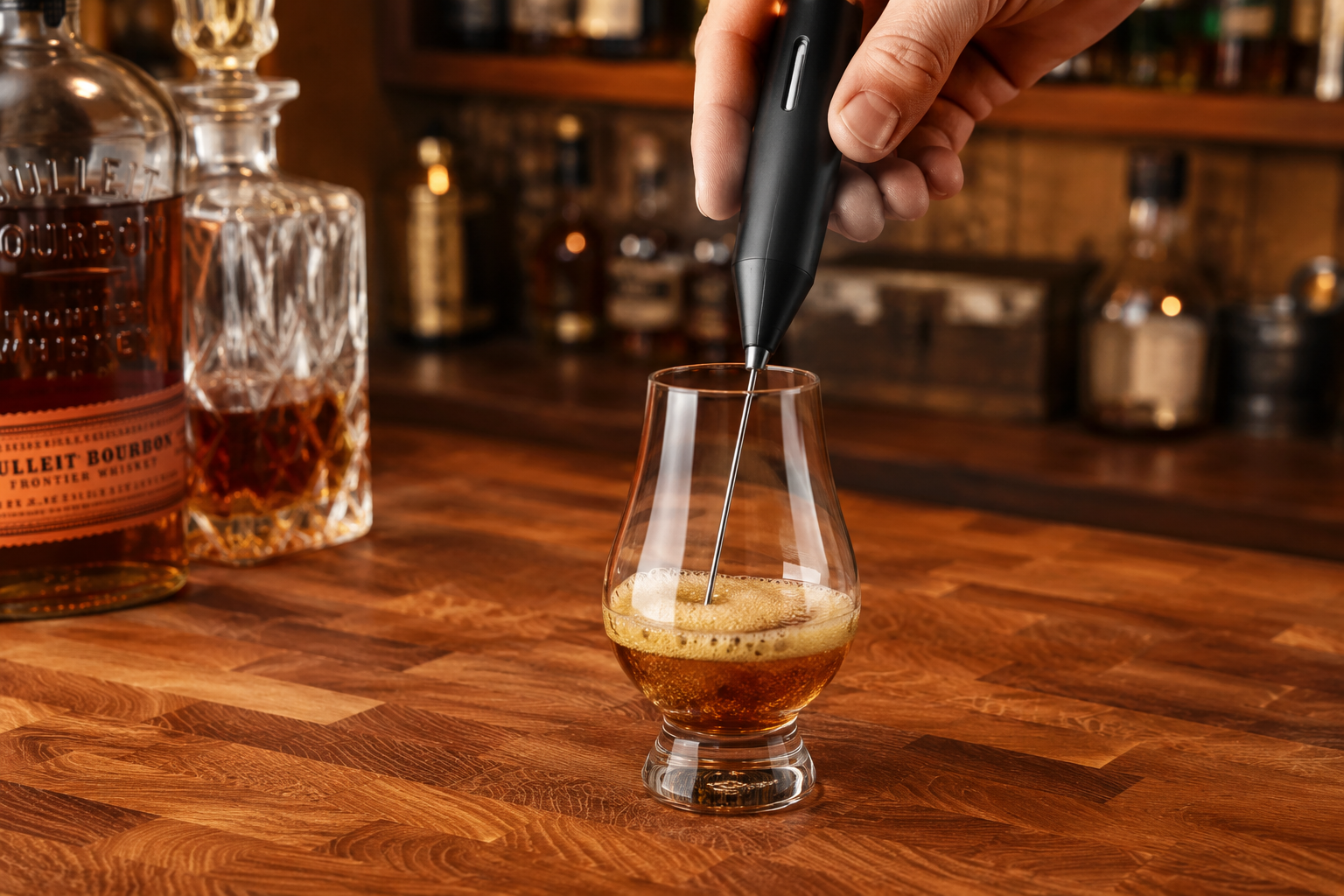
Frothing bourbon with a milk frother works by rapidly forcing oxygen into the liquid, which mimics — and speeds up — the natural “breathing” process whiskey undergoes when poured into a glass. Reviewers report real but inconsistent results: some bourbons open up and smooth out, others don’t change much, and a few taste worse. It’s a 30-second experiment worth trying, not a guaranteed upgrade.
If you own a $10 handheld milk frother and a bottle of bourbon, you’ve probably seen this trick floating around your feed by now. Dunk the wand in your glass, hit the button, and thirty seconds later you’re supposedly drinking a smoother, more expressive pour. It sounds like a kitchen gadget urban legend. It’s also gotten enough attention from spirits writers and home bourbon nerds that it’s worth actually digging into.
What Frothing Actually Does to Bourbon
Whiskey drinkers have known for decades that a glass poured a while ago often tastes better than one you drink immediately — bartenders and reviewers call this “letting it breathe.” The theory, backed by distilling researchers, is that alcohol molecules in a freshly poured glass tend to clump together in ways that mute aroma and flavor. Given air and time, those clusters loosen up, which lets more of the underlying flavor compounds reach your nose and palate.
A milk frother speeds that process up dramatically. Instead of letting a glass sit uncovered for 20–30 minutes, you’re mechanically agitating the liquid and forcing air bubbles through it in a matter of seconds. In theory, you get a compressed version of the same effect: oxidation that mellows harsher tannins and rougher edges, letting subtler notes come through instead of getting steamrolled by ethanol burn.
Could Frothing Hurt Your Bourbon?
Yes — theoretically, and this is the part most viral posts skip. Oxidation is a double-edged sword. A little bit mellows tannins and opens up aroma. Too much breaks down the same flavor compounds you’re trying to preserve, which is the exact mechanism behind a bottle tasting flat or “off” months after it’s been opened and repeatedly exposed to air.
A quick 30–60 second blitz with a frother is nowhere near enough oxidation to meaningfully damage a fresh pour — you’d need sustained, repeated air exposure over a much longer timeframe for that. But it’s a good reason not to go overboard: there’s no evidence that frothing for five minutes works better than frothing for thirty seconds, and pushing it longer only increases the odds you’re on the wrong side of that oxidation curve.
How to Froth Bourbon (Without Making a Mess)
- Pour a normal serving into a rocks glass or Glencairn — don’t fill it to the brim, since frothing creates bubbles and a bit of splash.
- Insert the frother wand about halfway into the liquid, angled slightly so it doesn’t just spin at the surface.
- Run it for 20–45 seconds. Start on the shorter end for your first try.
- Let it settle for 15–20 seconds before tasting — the bourbon will look slightly cloudy or bubbly at first and should clear.
- Taste it against an unfrothed pour of the same bourbon, side by side, so you’re actually comparing rather than relying on memory.
That last step matters more than people give it credit for. Palate memory is unreliable, and the only way to know if frothing did anything is to have a control glass sitting right next to it.
Use a Clean Frother — Seriously
This is the step people skip, and it’s the one that can actually ruin the experiment. Most handheld frothers spend their lives whisking milk, and dried milk residue is exactly the kind of thing that clings to a wire whisk coil and hides in the crevices around the motor housing. Run that same wand straight into your bourbon and you’re not just aerating — you’re adding a faint film of old dairy protein and fat to a spirit that’s supposed to taste like oak and vanilla, not forgotten cappuccino.
Before you use any frother on whiskey:
- Run it in warm, soapy water for 15–20 seconds and let it spin to clean the wire coil, then rinse thoroughly.
- Check the coil itself for any visible dried residue — a quick once-over with a soft brush or toothpick clears out anything stuck in the spring.
- Dry it completely before it touches your bourbon. Leftover water dilutes your pour and leftover soap will absolutely wreck the taste.
- Consider keeping a dedicated frother for spirits if you’re doing this regularly, so you’re never cross-contaminating with whatever you frothed for your morning latte.
A cheap, dedicated frother solves this problem permanently and costs less than a bottle of mid-shelf bourbon.
Our Pick for Frothing Bourbon
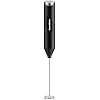
A simple handheld frother is all this experiment needs — no need for anything fancy or automatic. Keep this one in the bar cart, not the coffee station, and you’ll never have to worry about a lingering milk aftertaste in your glass.
Check the current price on Amazon →
As an Amazon Associate, Whiskey Consensus earns from qualifying purchases.
The Whiskey Consensus Verdict
Frothing bourbon isn’t a myth and it isn’t magic. The science behind it — that aeration disperses alcohol molecules and lets flavor compounds express more clearly — is the same principle behind letting a glass breathe, just compressed into 30 seconds. Expert opinion leans cautiously positive, real-world testing is genuinely mixed bottle to bottle, and there’s basically zero downside to trying it on one glass of a bottle you already own, provided your frother is clean and you don’t overdo it.
Our take: it’s a legitimate, low-risk experiment rather than a guaranteed upgrade. Try it side-by-side with a control pour, expect it to work better on higher-proof bottles, and don’t be surprised if your favorite everyday bourbon just doesn’t change much. That inconsistency is honestly part of the fun.
FAQ
Does a milk frother actually aerate bourbon?
Yes. The whisking action forces air bubbles through the liquid, which is a faster, more aggressive version of the natural aeration that happens when whiskey sits in an open glass.
Is frothing the same as letting whiskey breathe?
It’s the same underlying mechanism — oxygen exposure — condensed into a much shorter window. Traditional breathing happens passively over 20–30 minutes; frothing forces a similar effect in under a minute.
Can frothing ruin my bourbon?
A single short frothing session (under a minute) is very unlikely to damage a pour. Over-oxidation is a real phenomenon, but it typically requires much longer or repeated air exposure than one quick blitz with a frother.
Do all bourbons taste better frothed?
No. Results vary significantly by bottle. Higher-proof bourbons tend to benefit most, since aeration helps dissipate some of the alcohol heat, but some bottles show little to no change.
What frother should I use for bourbon?
Any basic handheld milk frother works. The important part is hygiene — clean it thoroughly before and after using it on spirits, and consider keeping a separate one dedicated to your bar cart.
Have you tried frothing your own bourbon? Let us know which bottles surprised you in the comments.