What’s the best bourbon for a mint julep?
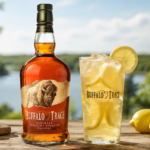
A high-rye or traditional-mash bourbon in the 90-100 proof range makes the best mint julep because it holds up against the sugar and mint instead of disappearing into them. Buffalo Trace is the most commonly cited choice for good reason — it’s the official bourbon of the Kentucky Derby’s julep program and has the caramel-forward, moderate-spice profile that plays well with mint and sugar. Wheated bourbons work too, but they lean softer and sweeter, which can make the drink one-dimensional once you add simple syrup.
The mint julep is a three-ingredient drink — bourbon, sugar, and mint, built over crushed ice — so the bourbon isn’t hiding behind a long ingredient list. That’s exactly why the pick matters more here than in a cocktail with six modifiers. A bourbon that’s too soft gets flattened by the sugar; one that’s too hot or too oaky fights the mint. You want something with enough proof and grain character to still taste like bourbon once it’s diluted by melting crushed ice.
Is Buffalo Trace really the best choice for a mint julep?
Buffalo Trace is a strong, well-supported choice — it’s the bourbon served at Churchill Downs during Kentucky Derby week, and its low-rye mash bill gives it a rounder, caramel-and-vanilla profile that doesn’t clash with fresh mint. It’s also priced and distributed widely enough that it’s a realistic bottle to actually batch a julep with, rather than a limited release you’re rationing.
The reason Buffalo Trace shows up in so many mint julep recommendations isn’t just marketing — it’s a functional fit. At 90 proof, it has enough backbone to survive dilution from crushed ice without going watery, but it’s not so hot or oaky that it overpowers the mint. If you want a starting point and don’t want to overthink the bottle, this is it. For a citrus-forward variation using the same bottle, the site’s Buffalo Trace bourbon lemonade recipe shows how the same base handles a different mixer.
Does Jack Daniel’s work in a mint julep?
Jack Daniel’s works in a mint julep, but it changes the drink’s character rather than replicating a classic Kentucky julep — the charcoal-mellowing (Lincoln County Process) that defines Tennessee whiskey adds a soft, slightly smoky sweetness that some drinkers like with mint and some find muddies the herbal note. It’s a legitimate substitution, not a lesser one, but expect a different drink.
Because Jack Daniel’s Old No. 7 is mellower and a touch sweeter out of the gate than a typical straight bourbon, some julep drinkers cut back the simple syrup slightly to keep the drink from tipping too sweet. If you’re curious how the whiskey itself is built before deciding whether it fits your julep, the site’s full Jack Daniel’s Old No. 7 review covers the mash bill and mellowing process in detail. For a higher-proof option from the same brand that stands up better to dilution, the Jack Daniel’s Single Barrel Select barrel proof pick is worth a look.
Should I use a high-rye bourbon or a wheated bourbon?
High-rye bourbons add spice and cut through the sugar and mint with more edge, while wheated bourbons go softer, rounder, and sweeter — neither is objectively “better,” but they produce noticeably different juleps. If your simple syrup ratio runs sweet, a high-rye bottle balances it; if you’re already using a light hand with sugar, a wheater will feel smoother rather than sharp.
| Style | Proof range to look for | Effect in a julep | Best for |
|---|---|---|---|
| High-rye bourbon | 90-100+ | Spice and structure cut through sugar and mint | Drinkers who want the mint to have something to push against |
| Traditional/low-rye bourbon | 86-90 | Caramel, vanilla, balanced — the “classic Derby” profile | A safe, crowd-pleasing default (e.g. Buffalo Trace) |
| Wheated bourbon | 90-100 | Softer, sweeter, rounder — can flatten with too much syrup | Drinkers who find high-rye juleps too sharp |
| Tennessee whiskey | 80-94 | Charcoal-mellowed sweetness, less grain bite | A milder, less traditional take (e.g. Jack Daniel’s) |
How much sugar and mint does a mint julep actually need?
A standard mint julep runs roughly 2 oz bourbon, 0.25-0.5 oz simple syrup, and 8-10 fresh mint leaves, built over crushed ice and garnished with a mint sprig. The ratio of bourbon to sugar is the entire balancing act — too much syrup and any bourbon tastes generic; too little and a high-proof pick will taste harsh.
Simple syrup (a 1:1 sugar-to-water mix, or 2:1 for a heavier syrup that dilutes less) is the standard here rather than muddling raw sugar, which is harder to dissolve evenly in a cold drink. The mint should be pressed gently, not muddled hard — over-muddling releases bitter chlorophyll instead of the bright, sweet mint oil you actually want. Crushed ice matters too: it melts faster than cubes, which is intentional — the dilution is part of the drink, not a flaw, which is another reason bourbon choice and proof matter so much here.
How do I batch mint juleps for a group without losing quality?
Batching a mint julep means combining bourbon and simple syrup in a pitcher ahead of time — typically at a 4:1 or 5:1 bourbon-to-syrup ratio — and adding mint and crushed ice fresh per glass at serving time, rather than batching the mint in, since it turns bitter and dull if it sits in liquid for hours. This is the single most searched practical question around mint juleps for a reason: nobody wants to build 20 individual drinks during Derby week.
The batch-and-serve method also lets you scale the bourbon choice question down to one decision instead of twenty. Pick one solid, moderately priced bottle — proof in the 90-100 range holds up best to sitting pre-mixed and then hitting crushed ice — and keep the mint and ice steps entirely at the glass. For other big-format bourbon drinks built the same way, the site’s big-batch bourbon cocktail recipes cover the same pitcher-ahead, garnish-fresh approach.
Frequently asked questions
What bourbon does the Kentucky Derby use for mint juleps?
Buffalo Trace has been the official bourbon of the Kentucky Derby’s mint julep program, which is the main reason it’s the most frequently recommended bottle for the drink.
Can I make a mint julep with rye whiskey instead of bourbon?
Yes — rye brings more pepper and spice and works if you want a sharper, less sweet julep, though it departs further from the traditional profile than a high-rye bourbon does. The site’s best rye whiskeys guide is a useful starting point if you want to go that route.
Do I need a julep cup, or does a regular glass work?
A metal julep cup is traditional because it frosts on the outside from the crushed ice and keeps the drink colder longer, but any chilled rocks glass will make a perfectly good julep — the cup is about presentation and temperature, not flavor.
Is a cheap bourbon fine for a mint julep, or does the bottle matter?
Because sugar and mint soften a lot of rough edges, a mid-shelf bourbon in the 90-100 proof range is genuinely fine and often preferable to an expensive, delicate sipping bourbon whose subtlety gets lost under syrup and ice.
How far ahead can I batch mint juleps before a party?
The bourbon-and-syrup base can be mixed hours or even a day ahead and refrigerated; mint and crushed ice should always be added fresh at serving time, not batched in.